Vietnamese Food for Australian Partners: Guide for Mixed Couples (2025)
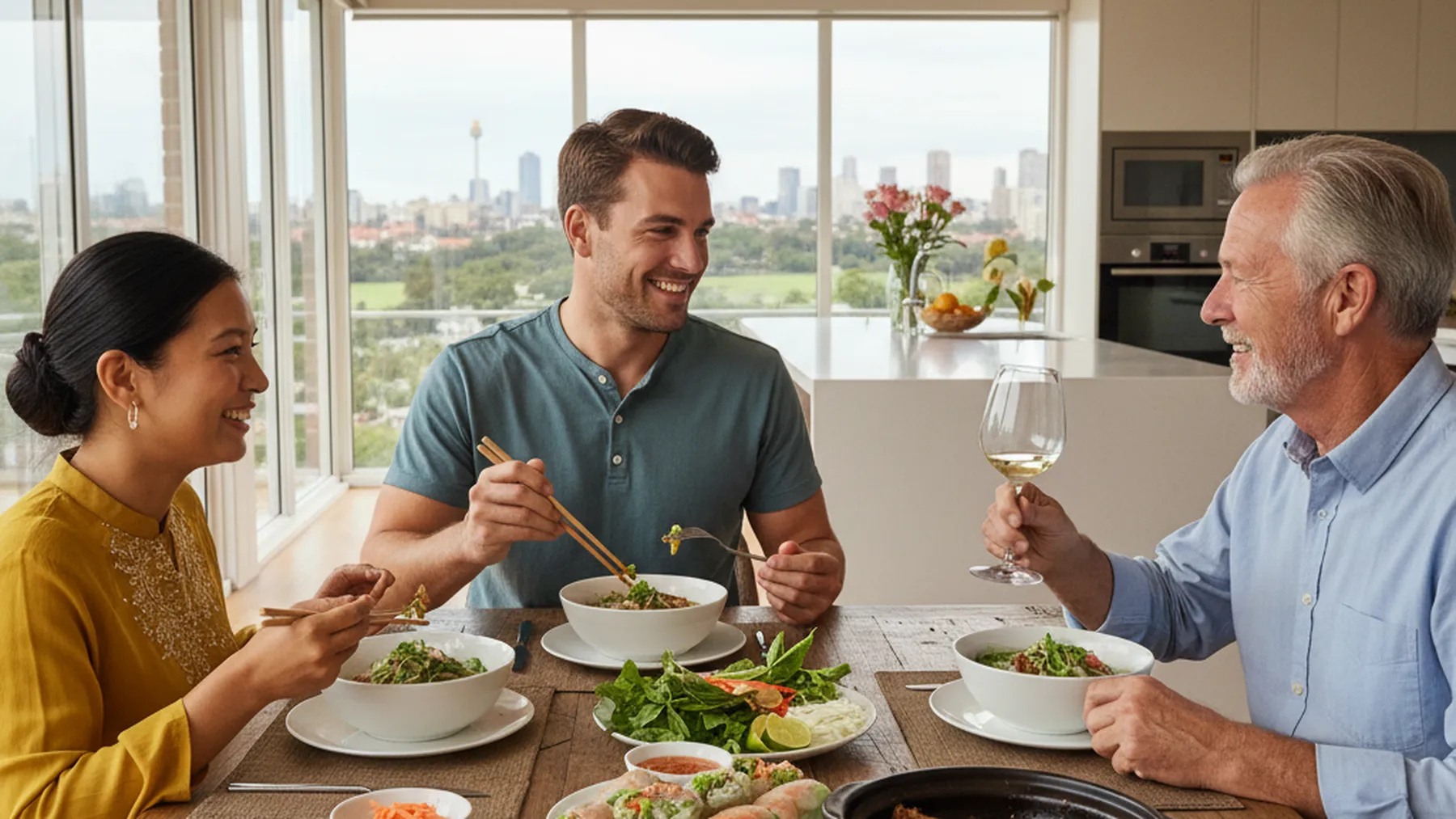
Guide for Vietnamese-Australian mixed couples navigating food culture. How to introduce Vietnamese food to Australian partners, handle family dinners, and build shared food experiences across cultures.
Vietnamese Food and Mixed Relationships
I'm Vietnamese-Australian with an Anglo-Australian partner. Food has been both bridge and barrier in our relationship. She loves phở now, but it took three attempts before she understood it. My mother's fish sauce-heavy cooking initially overwhelmed her. We've navigated these differences for five years.
This guide is for Vietnamese people dating Australians, and Australians dating Vietnamese - how to introduce, understand, and share Vietnamese food culture across cultural boundaries.
Starting Your Partner on Vietnamese Food
First Date Vietnamese Food Strategy
Don't start with:
- Phở (too intimidating)
- Anything with visible bones
- Overly fishy dishes
- Family-style restaurants where you're the only non-Vietnamese
Start with:
- Bánh mì: Familiar format (sandwich), approachable
- Fresh spring rolls: Light, healthy, not scary
- Vietnamese iced coffee: Sweet, delicious gateway drug
Ideal first restaurant: Modern Vietnamese cafe like Annam (Marrickville) or similar - English menu, nice ambiance, approachable Vietnamese food.
Personal experience: My first meal with my partner was bánh mì and Vietnamese coffee at a cute Marrickville cafe. Not threatening, conversation-friendly, she actually enjoyed it.
The Progression Strategy
Dates 1-3: Gateway foods
- Bánh mì
- Spring rolls
- Vietnamese coffee
- Simple rice dishes
Dates 4-6: Introduce complexity
- Phở (explain it properly first)
- Bún (vermicelli bowls)
- Bánh xèo (fun, interactive)
Dates 7+: Full immersion
- Cabramatta visit
- Family-style Vietnamese dining
- Adventurous dishes
Explaining Vietnamese Food to Your Partner
How to Introduce Phở
Don't say: 'It's noodle soup.'
Do say: 'It's Vietnamese comfort food - slow-cooked beef broth with rice noodles, fresh herbs, and meat. You customize it yourself. It's what Vietnamese people eat when they're sick, hungover, or just want something nourishing.'
Setting expectations:
- It's eaten with chopsticks and spoon simultaneously
- You add your own herbs and sauces
- Slurping is normal
- It's messy - that's part of it
- The broth is everything
How to Explain Fish Sauce
The challenge: 'Fermented fish' sounds terrible to Australians.
Better approach:
- 'It's like the Asian version of Worcestershire sauce'
- 'It's umami - that savory flavor you love in cheese and mushrooms'
- 'Used properly, you don't taste fish, you taste deliciousness'
Let them try good fish sauce: Don't start with cheap fish sauce. Use Phú Quốc quality in proper ratio. Bad fish sauce is genuinely offensive, good fish sauce is magical.
Navigating Herbs
Australian expectation: Herbs are parsley, basil, rosemary.
Vietnamese reality: Completely different herb palette.
How to introduce:
- 'This is Thai basil - different from Italian basil, tastes like licorice'
- 'This is Vietnamese mint - peppery and strong'
- 'Try each herb separately first, then in combination'
Personal tip: My partner thought she hated coriander until she had it fresh in Vietnamese food with the right flavors. Context matters.
Common Challenges and Solutions
Challenge 1: 'It's Too Spicy/Strong/Fishy'
Solutions:
- Start with mild dishes
- Adjust spice levels (ask restaurants)
- Choose restaurants that understand Western palates
- Gradually build tolerance
What worked for us: My partner's tolerance for fish sauce, chili, and strong flavors increased over a year. Don't push too hard initially.
Challenge 2: Eating With Chopsticks
Reality: Most Australians can't use chopsticks properly.
Solutions:
- Teach them beforehand (YouTube tutorials)
- Practice at home first
- Choose dishes that don't require expert chopstick skills
- Asian restaurants provide forks - it's okay
My approach: I taught my partner chopsticks before our first Vietnamese meal together. She appreciated not being embarrassed in public.
Challenge 3: Family Dinners
The scenario: Your Vietnamese family invites your Australian partner to dinner.
Preparing your partner:
- Explain family-style dining (everyone shares)
- Warn about quantity of food
- Explain they'll be offered food constantly
- Teach basic polite phrases in Vietnamese
- Explain rice is main food, other dishes are toppings
Preparing your family:
- Ask them to make some mild dishes
- Request English when possible
- Explain your partner's food boundaries
Personal story: First dinner with my parents, they made seven dishes. My partner was overwhelmed but touched by the effort. I had to explain my mother shows love through food abundance.
Foods That Work Well for Mixed Couples
Universal Crowd-Pleasers
- Bánh mì: Everyone loves it. Format is familiar.
- Fresh spring rolls: Light, healthy, not scary.
- Vietnamese coffee: Sweet, delicious, addictive.
- Grilled meats: Familiar proteins, great flavor.
- Fried spring rolls: Crispy, tasty, not challenging.
Foods to Introduce Carefully
- Phở: Explain well, choose good restaurant
- Bún: Similar to phở but more components
- Bánh xèo: Looks weird, tastes great
- Chè (desserts): Very different from Western desserts
Foods to Save for Later
- Offal dishes (intestines, blood cake)
- Overly fermented items
- Whole fish with head
- Dishes with visible bones
- Balut (if ever)
Cooking Vietnamese Food for Your Australian Partner
Adapting Vietnamese Home Cooking
Adjustments that help:
- Less fish sauce initially, increase gradually
- Mild first, let them add chili if desired
- Explain what you're cooking as you go
- Present it nicely (Instagram helps here)
Easy Vietnamese dishes for beginners:
- Vietnamese fried rice: Familiar format, Vietnamese flavors
- Lemongrass chicken: Approachable protein, great flavor
- Caramelized pork: Sweet and savory, not challenging
When Your Partner Cooks Vietnamese Food
Don't be that person who criticizes:
- They're trying to connect with your culture
- It won't be like your mother's cooking
- Appreciate the effort
- Gently guide improvements
Personal experience: My partner makes phở now. It's not authentic, but it's good and she's proud of it. I eat it happily and save criticisms.
Restaurant Strategies for Mixed Couples
Choosing Vietnamese Restaurants
For early dating:
- Modern Vietnamese cafes (Marrickville style)
- English menus essential
- Mixed clientele
- Good ambiance
For established couples:
- Can venture to Cabramatta
- Traditional Vietnamese restaurants
- Family-style dining
Ordering Strategy
Share everything:
- Order 3-4 dishes to share
- Mix safe and adventurous
- Let them try small amounts
- Have backup food if needed
Example order for two:
- Spring rolls (safe start)
- Phở to share (main)
- Bánh xèo (fun, different)
- Vietnamese coffee (finish)
Understanding Cultural Differences Through Food
Vietnamese Food Values
- Fresh herbs and vegetables essential
- Balance of flavors (sweet, sour, salty, spicy, bitter)
- Communal eating
- Rice is central, not side dish
- Food shows love and care
Australian Food Expectations
- Familiar proteins (chicken, beef, pork)
- Individual plates
- Bread/potatoes as staple
- Less complex flavors
- Clear separation of courses
The bridge: Vietnamese food that Australians already love (bánh mì, phở, spring rolls) helps bridge these differences.
When Food Causes Conflict
Common Relationship Tensions
'Why does your mother keep feeding me?'
- Explanation: Vietnamese culture shows love through food
- Solution: Eat a bit, compliment it, explain you're full
'Why do you put fish sauce in everything?'
- Explanation: It's our salt, our umami base
- Solution: Introduce it gradually, use quality brands
'Why do we always eat Vietnamese food?'
- Explanation: It's comfort food, connection to culture
- Solution: Compromise, alternate cuisines
Finding Balance
In our relationship:
- Vietnamese food 3-4 times a week
- Australian/Western food 2-3 times
- Other Asian cuisines 1-2 times
Both of us adapted our preferences through exposure and respect.
Vietnamese Food as Cultural Bridge
Food has helped my partner understand Vietnamese culture:
- Family importance (shown through meals)
- Refugee history (why certain foods matter)
- Values (fresh ingredients, balance, care)
- Language (she's learned food vocabulary)
She understands my culture better through eating it than through any amount of explanation.
Final Tips for Success
For Vietnamese People
- Be patient with your partner's learning curve
- Don't force adventurous foods too early
- Explain cultural context, not just food
- Appreciate their effort to understand
- Compromise on frequency
For Australian Partners
- Approach with open mind
- Try things multiple times (tastes change)
- Ask questions, show interest
- Understand food connects to identity
- Don't compare to Western food standards
For Both
- Use food as conversation starter
- Cook together (bonding activity)
- Visit markets together
- Learn about each other's food culture
- Laugh about the awkward moments
Success Stories
My partner now:
- Orders phở independently
- Knows good bánh mì from bad
- Uses chopsticks proficiently
- Makes Vietnamese coffee at home
- Has opinions on fish sauce brands
- Takes me to Vietnamese restaurants for my birthday
It took time, patience, and lots of Vietnamese meals, but Vietnamese food became our shared culture.
Five years in, we still discover new Vietnamese dishes together. She'll never eat Vietnamese food exactly like I do, and that's okay. She eats it in her way, with her preferences, and genuinely enjoys it.
That's success.
Related Articles: